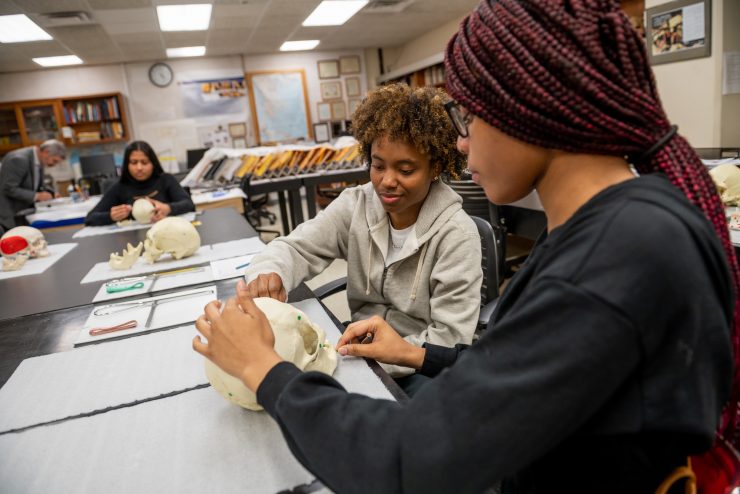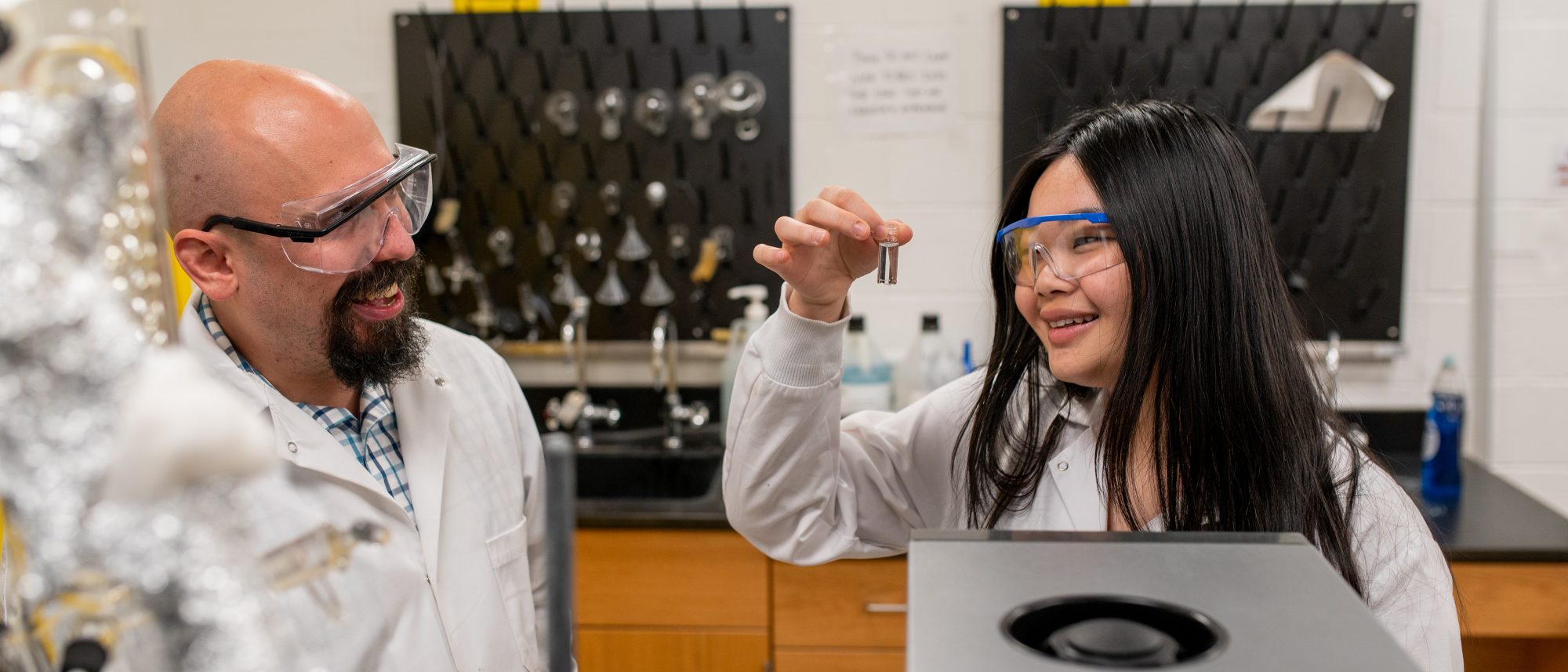
You’ll experience faculty mentors who are extraordinary teachers, hands-on learning, innovative programs and exceptional opportunities for research.
A Best College
Did you know Adelphi is nationally ranked as a Best College by U.S. News & World Report?

8 Schools, 1 Mission
Whether online or on campus, the learning experience at Adelphi is powerful, personal and life changing. Professors know your name and your goals—and are dedicated to your academic success.
Academics at Adelphi are highly regarded for their rigorous standards, small class sizes, world-class faculty, and an innovative new approach to personalizing the higher education experience—resulting in high levels of student success and strong career outcomes.
Majors and Programs
All our undergraduate, graduate, doctoral and certificate programs and opportunities are created to meet the demands of today’s technology-driven, global, and interconnected economy and society. The ability of our graduates to successfully navigate these connections, emerge as leaders, and make meaningful contributions in their communities is the hallmark of an Adelphi education.
Signature Programs
As part of our mission to offer a uniquely personalized educational experience to every student, Adelphi offers special programs that allow you to further your interest in a particular area, find new opportunities, and fulfill your personal goals. Each special program forms a welcoming community for students with shared interests, needs and goals.
Online Programs
Many individuals are motivated to learn, but need a flexible education to balance their busy lives. We provide these individuals with a diverse array of Online Program options that not only offer convenience, but also mirror the liveliness of a face-to-face classroom environment.
Libraries
The Adelphi University Libraries are an invaluable resource primarily for students, faculty, staff, and alumni, but also for the broader community. Located at the Garden City campus and the NYC, Hauppauge, and Hudson Valley centers, they offer an extensive range of books and other materials and services to support your academic studies and enhance research. The University Libraries provide education, information resources, services, and facilities that advance teaching, learning, research, and creative activity.
Continuing Education and Professional Development
To help you thrive in your current field, or begin in a new one, Adelphi offers a wide variety of courses, workshops and certificate programs—in person or online—to help you stay current in your knowledge and expertise. Whether you’re a recent graduate looking to define your skills, or an advanced-level professional seeking to stay abreast of new trends in theory, policy or practice, these continuing education options can help. We warmly welcome visiting students and graduates of other colleges or universities, as well as Adelphi alumni.
Innovation Center
At the Adelphi Innovation Center, students and faculty engage in real-world challenges faced by corporations, governments, and nonprofit organizations. Students are trained to use abstract concepts learned in the classroom to create concrete innovative solutions to real problems. The Innovation Center has designed programs for students to work on as an extra class activity or for credit during their academic year, including live cases, internships and labs.
Our Academic Distinction



Find Your Pathway to Success
Recognized Excellence